



For decades, gold has served as a simple but unforgiving mirror of monetary reality. Not because it promises growth, yield, or innovation, but because it measures what paper currencies systematically conceal: the loss of purchasing power over time.
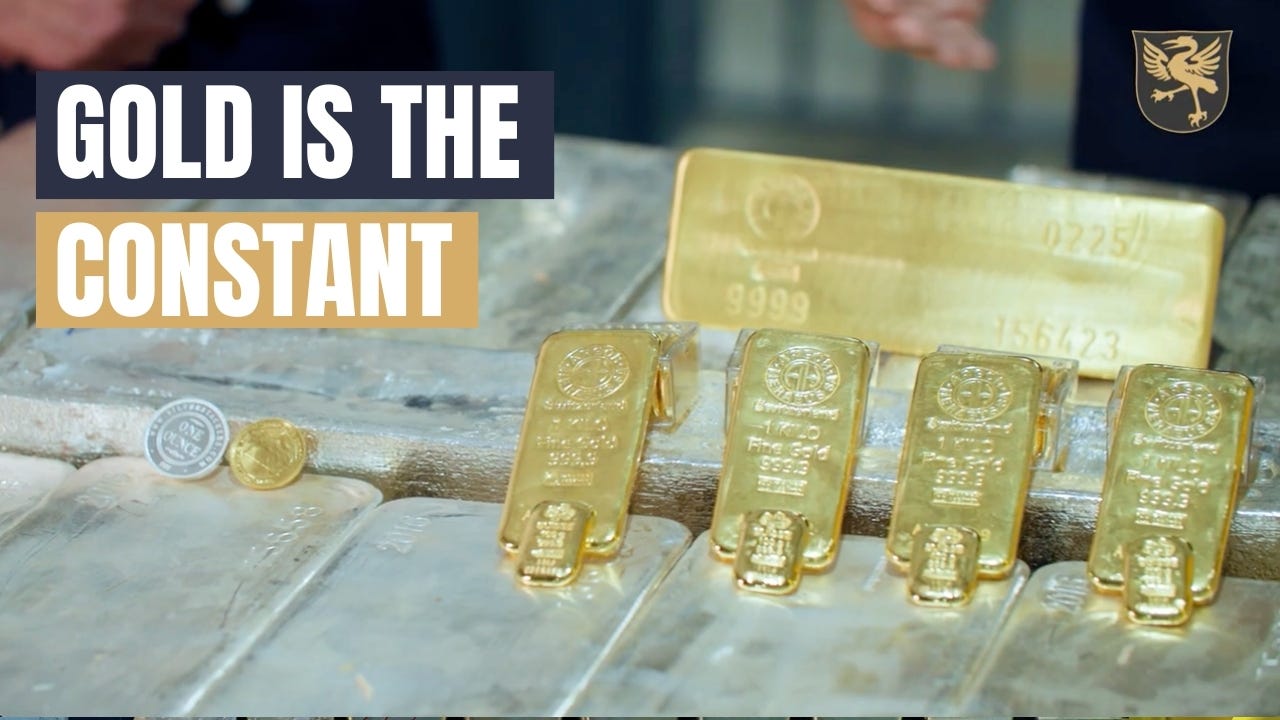
A single 400-ounce gold bar, acquired for roughly $14,000 in the early 1970s, now represents more than $1.4 million—not due to speculation or excess, but because fiat money has been steadily debased.
This is not theory, and it is not history. It is a lived experience, repeated across generations and confirmed whenever currencies fail and real money quietly preserves freedom, mobility, and wealth.
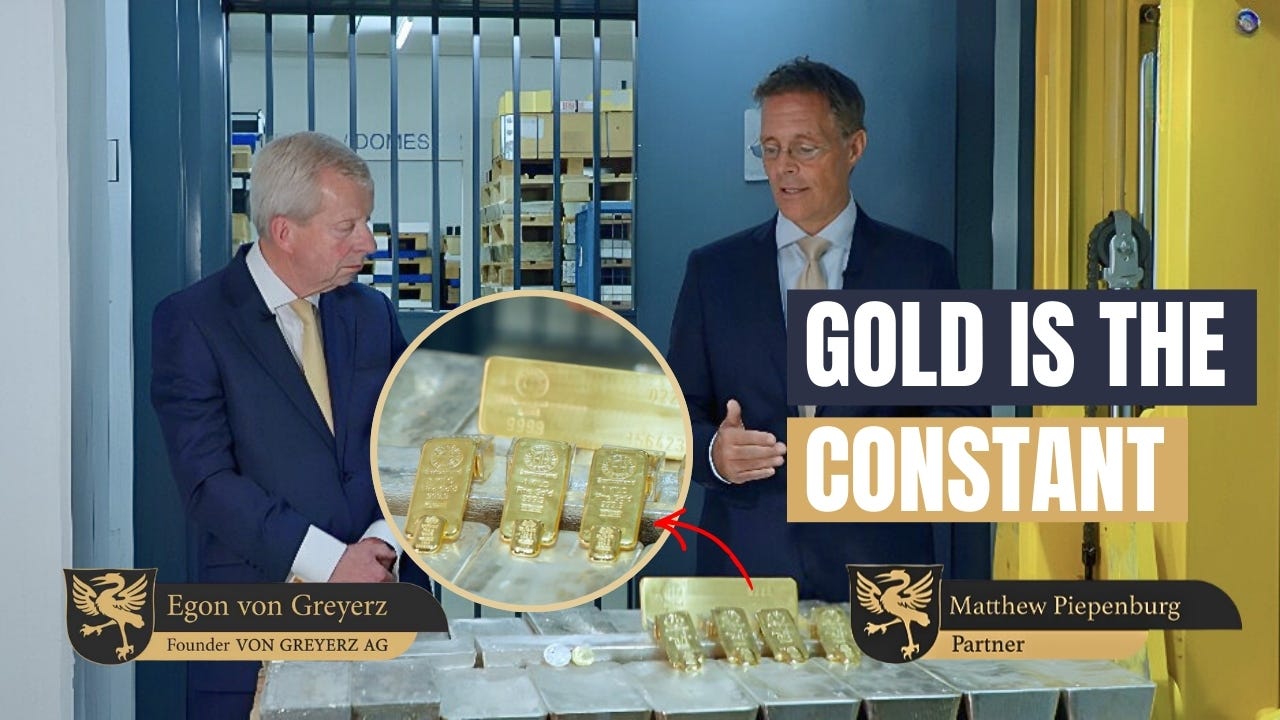
The reflections shared come from Egon von Greyerz and Matthew Piepenburg of VON GREYERZ AG, a firm long known for its focus on capital preservation outside the banking system.
Egon has spent decades warning about the structural fragility of fiat monetary systems and advising families on the preservation of purchasing power through physical gold and silver.
As the founder of VON GREYERZ AG, Egon’s perspective is shaped not by theory, but by lived experience across multiple monetary cycles, inflationary regimes, and currency failures.
KEY INSIGHTS
00:00 – 00:15 | Real Money vs. Currency
What stands before us is not “currency” but real money.
The distinction between fiat money and hard assets is no longer academic — it is now visibly and painfully real.
00:15 – 00:50 | Gold Preserves Value, Currencies Do Not
A 400-ounce gold bar cost roughly $14,000–$15,000 in the early 1970s.
Today, that same bar is worth over $1.4 million.
Gold did not change. Paper money lost over 99% of its purchasing power.
00:50 – 01:20 | Inflation Is a Monetary Failure, Not Rising Prices
Prices are not rising — money is falling.
Inflation is the slow, almost invisible destruction of purchasing power.
Most people only recognize it when it becomes catastrophic.
01:20 – 01:50 | Experience Is the Harshest Teacher
Those who lived through hyperinflation do not need theories.
History shows that gold protects not just wealth, but survival and freedom when currencies fail.
01:50 – 02:30 | Gold Is Owned by the Informed, Not the Majority
Almost no one bought gold at $300 per ounce.
Very few own it today, even above $4,000.
This is always the case: gold is ignored until it is no longer affordable.
02:30 – 03:10 | The End of a Monetary Cycle
We are approaching the final phase of a long monetary experiment.
In such periods, owning gold is not speculation — it is necessity.
03:10 – 04:00 | Silver: Accessible Real Money
For those who cannot afford gold, silver remains real money.
Silver offers accessibility without sacrificing monetary integrity.
Both metals must be held physically, in your own name, outside the banking system.


