


Gold won’t be useful when these conditions are met:
Currencies are stable
Inflation is low
Governments are running budget surpluses
Borrowing is around 25% to 30% of GDP
Countries have little debt
Fiat money will be the better choice in that case… but we all know that’s not the world today.
Most countries now have debt above 100% of GDP. Stock markets, bond markets and property have also been supported for years by low interest rates, heavy borrowing and high leverage.
Stocks are now around 250% of GDP, which is an absolute record in the measure used here.
The Buffett Indicator puts the current valuation into a longer historical context. The ratio of total publicly traded stocks to GDP is now around three times its 50-year mean.
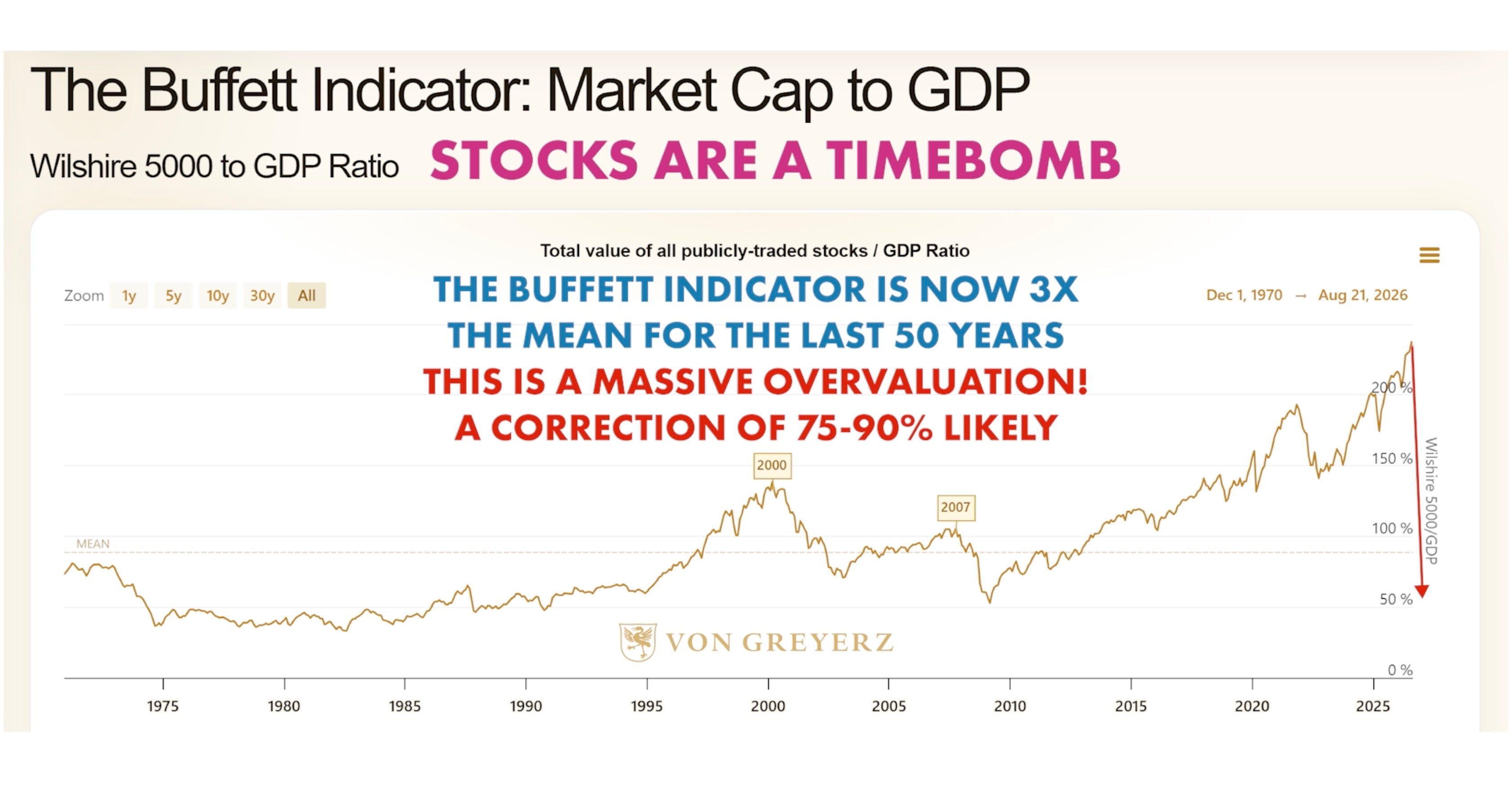
That leaves very little room for stocks to absorb a major change in financial conditions.
Corporate and sovereign borrowers are facing the same problem.
“Bonds are a total bubble with borrowers that will never repay their money.”
Global debt is estimated at around $370 trillion, before derivatives and the shadow banking system are taken into account. The derivatives market is estimated at around $2 quadrillion.
The same forces have pushed property prices higher. Low rates, high borrowing and leverage have inflated property markets, leaving them vulnerable when financial conditions change.
The 10-year U.S. Treasury yield also shows how the long period of falling yields came to an end in 2020.
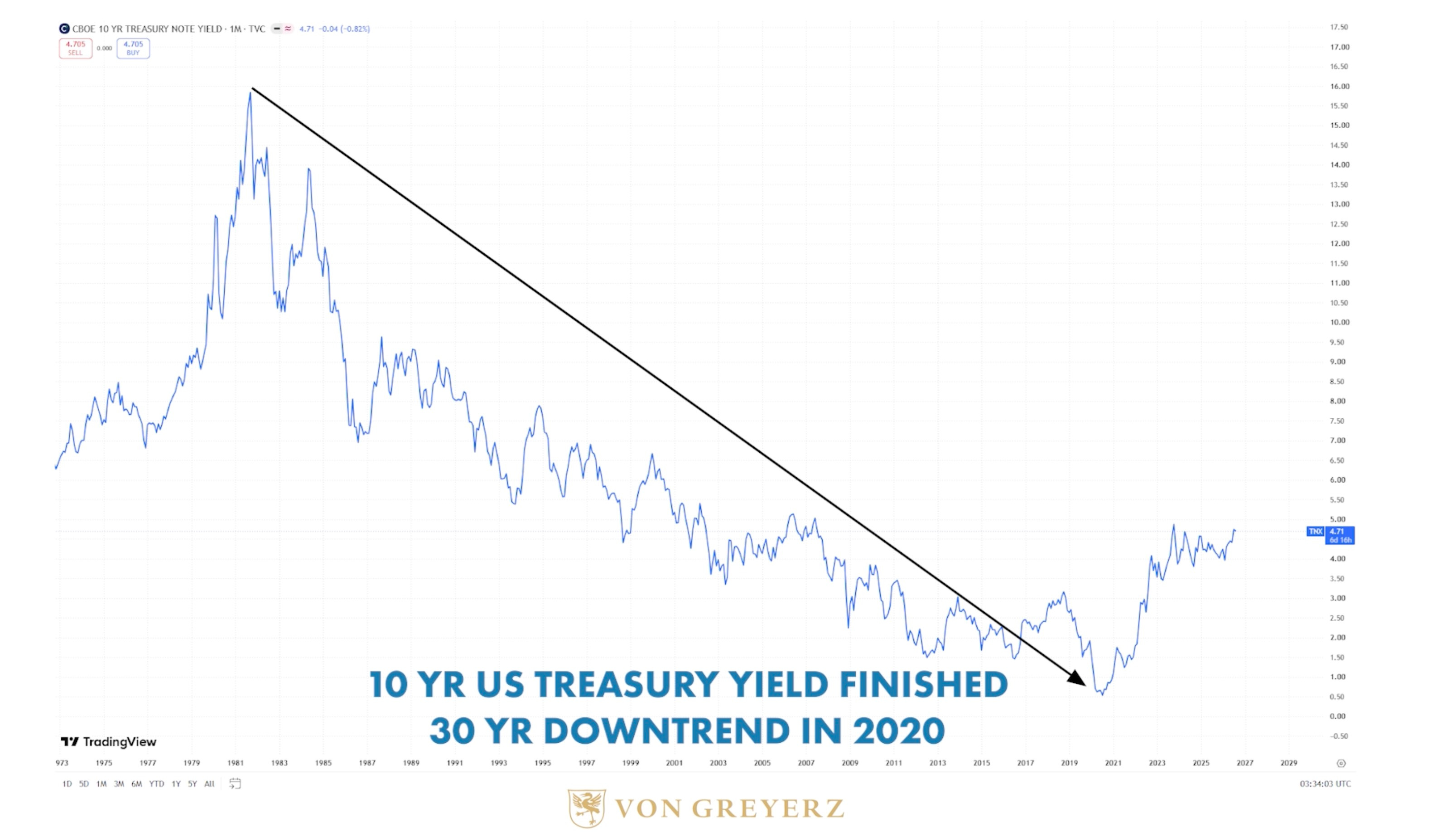
This matters because the period of easy money that supported stocks, bonds and property cannot simply continue indefinitely.
The question then becomes “What happens when those markets fall?”
Since 1971, when Nixon closed the gold window, gold has risen from $35 an ounce to around $4,470 in the figures used here. That is 127 times higher. Over the same period, the Dow has risen 57 times, before dividends.
The Dow-to-gold ratio gives a different picture of the stock market than the dollar price alone.
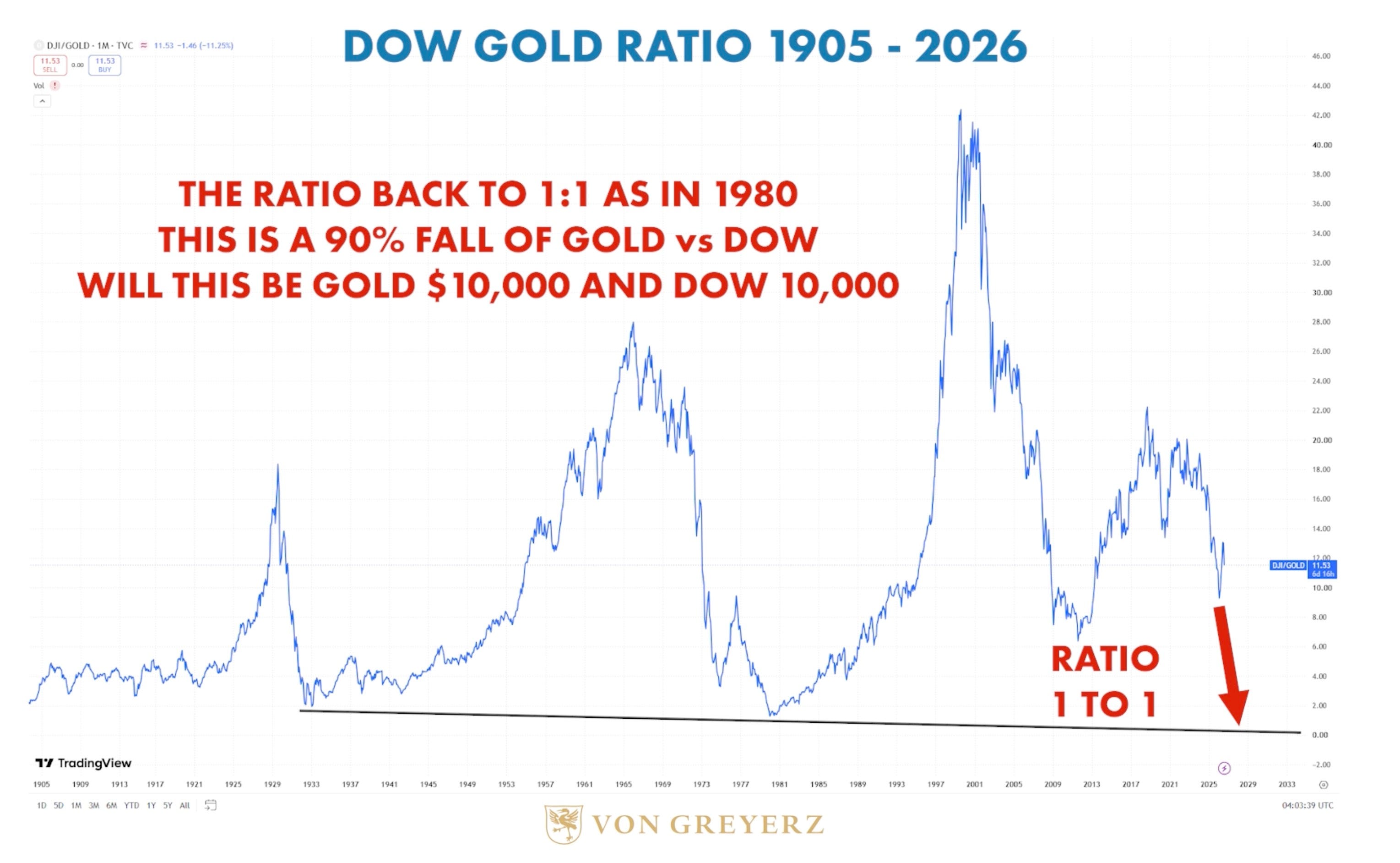
If conventional assets fall substantially against gold, the ratio could move back toward levels seen in earlier periods. The chart points to a potential return toward 1:1.
Gold itself has also gone through corrections. The recent correction is viewed as having ended, with the chart pointing toward much higher potential prices from here.
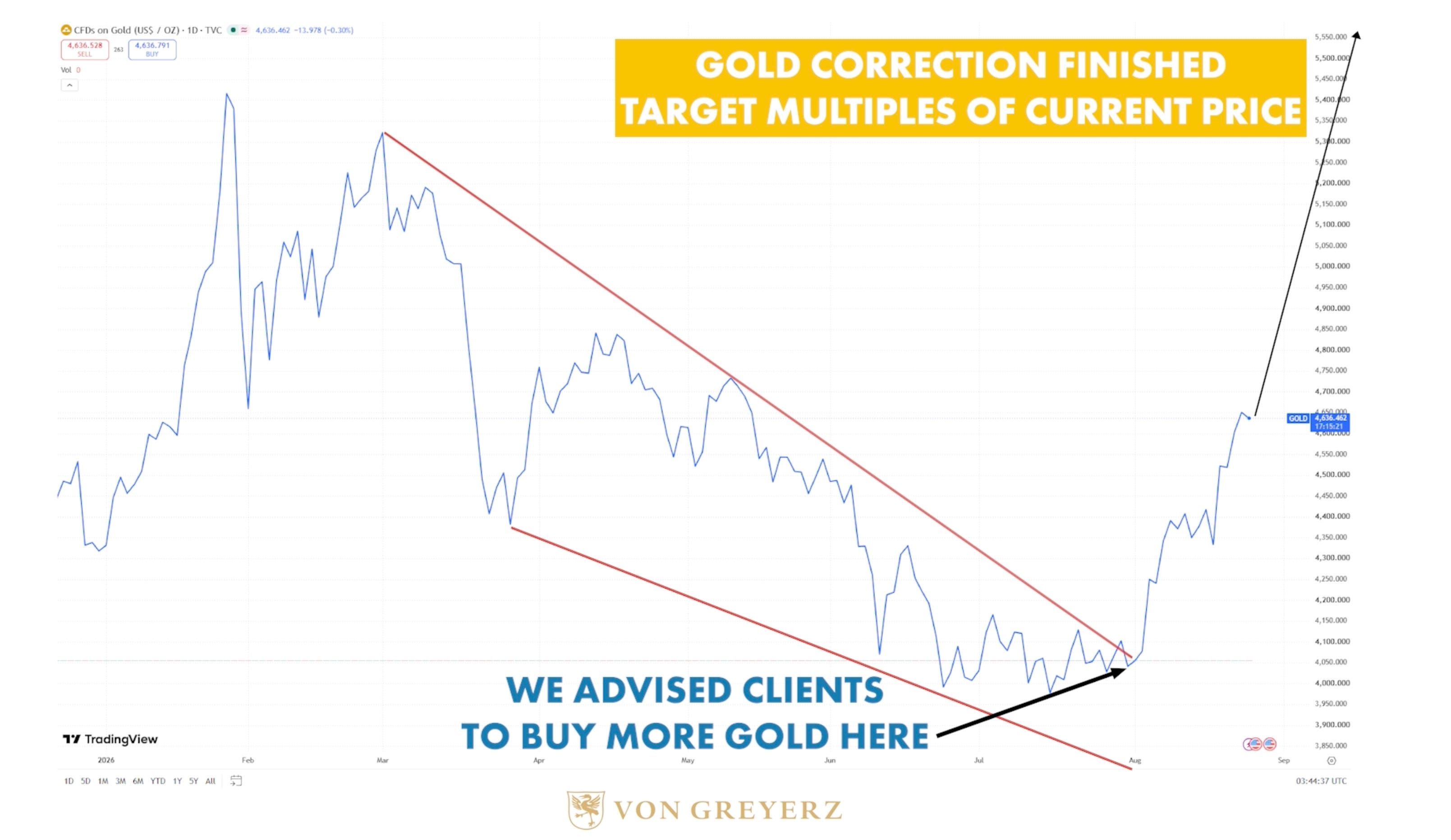
The point is not that gold will simply rise because its dollar price is going up.
If the dollar and other currencies lose purchasing power, the dollar price of gold can rise dramatically while the actual purchasing power of gold remains much more stable.
That is why giving one precise long-term dollar target for gold misses the main issue.
“It’s no use giving a dollar price for gold when the dollar is going down by the day.”
The same argument applies to silver. Gold has risen 131 times since 1971, while silver has risen only 55 times in the figures shown below. That leaves a large difference between the two metals.
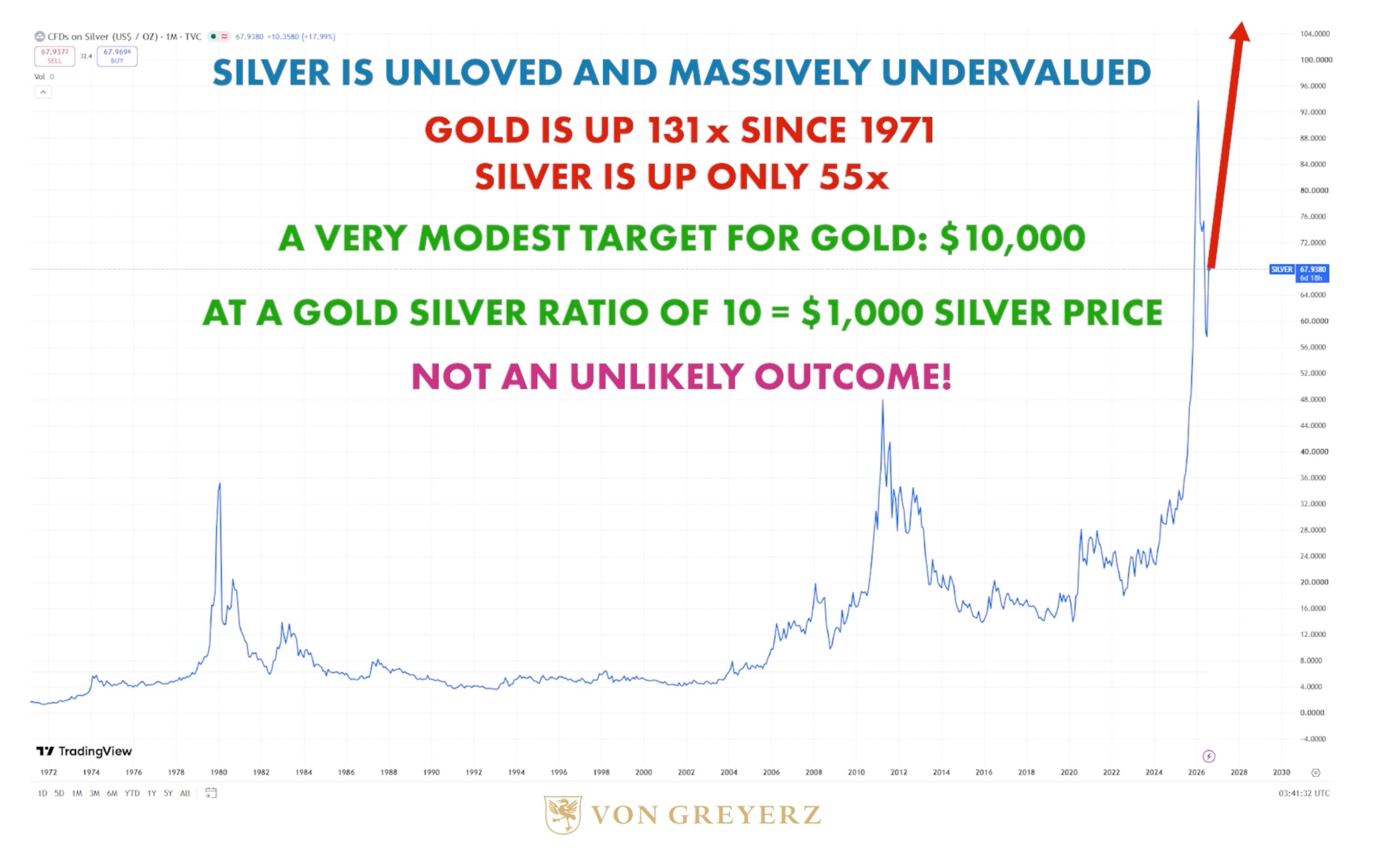
Silver is expected to move faster than gold if the monetary and inflationary conditions described here develop.
The conclusion is therefore quite simple.
Gold is not needed when currencies are sound, inflation is contained, and governments have their finances under control.
But waiting for those conditions before owning gold could mean waiting for a world that is unlikely to return soon.
The purpose of physical gold and silver is to preserve purchasing power when the financial system is under strain. That is why they remain relevant when stocks, bonds, property, and currencies are all exposed to the same debt problem.
KEY INSIGHTS
00:00 – 01:26 | Stocks and bonds face a reckoning
Stocks at 250% of GDP and heavily indebted bond markets are seen as highly vulnerable.
01:27 – 02:14 | Property joins the list of risks
Low rates, borrowing and leverage have pushed property prices higher, with major declines expected against gold.
02:15 – 03:01 | Gold outperforms over the long term
Gold has risen 127 times since 1971, compared with 57 times for the Dow before dividends.
03:09 – 04:31 | Wars threaten energy and markets
The conflicts in Ukraine and the Middle East could keep energy prices high and put further pressure on the global economy.
04:32 – 05:35 | Gold and silver for wealth preservation
Physical gold and silver are presented as the preferred assets during an inflationary period with high debt and interest rates.
05:36 – 06:44 | Gold protects purchasing power
Gold’s rising dollar price reflects currency weakness, while its real purchasing power has remained stable over long periods.
06:45 – 08:45 | When should you not own gold?
Gold is unnecessary when currencies are stable, inflation is low, and government finances are sound. Those conditions are unlikely in the coming years.


