

Gold has risen strongly over the past few years while technology stocks have captured most of investors’ attention.
At a glance, it appears that stocks have created the real wealth, while gold has simply kept pace with inflation.
Matthew Piepenburg argues that this conclusion depends on how wealth is measured.
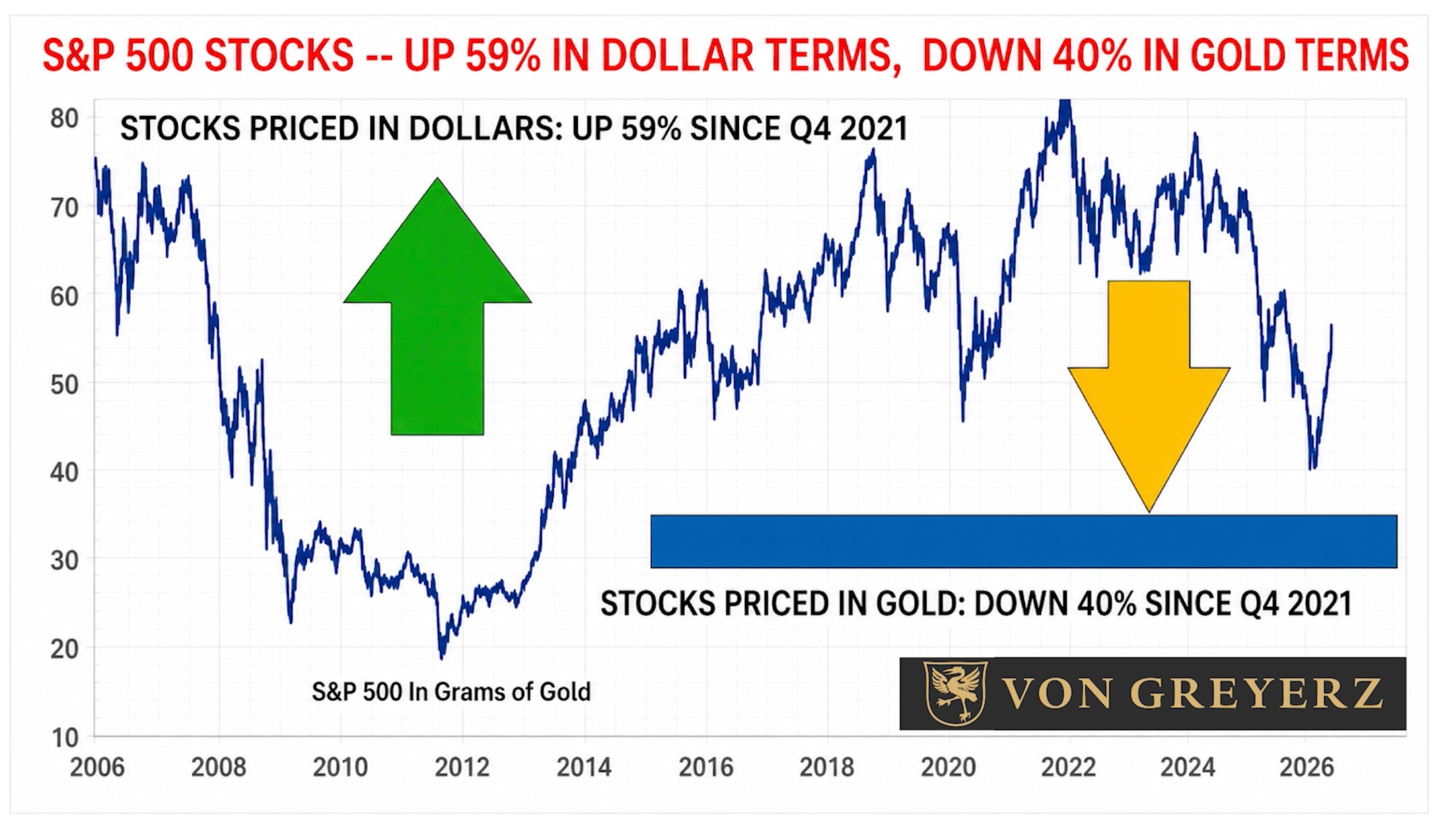
Since the fourth quarter of 2021, the S&P 500 has gained roughly 60% when measured in U.S. dollars. Measure the same index in gold, however, and it has lost around 40%.
The result changes because the value of the dollar has changed. If the currency used to measure financial assets steadily loses purchasing power, returns expressed in that currency can tell a very different story from returns measured in gold.
The same question extends beyond stock markets. It also appears in the way central banks manage their reserves.
For decades, U.S. Treasuries served as the world’s primary reserve asset and the preferred form of collateral across the financial system.
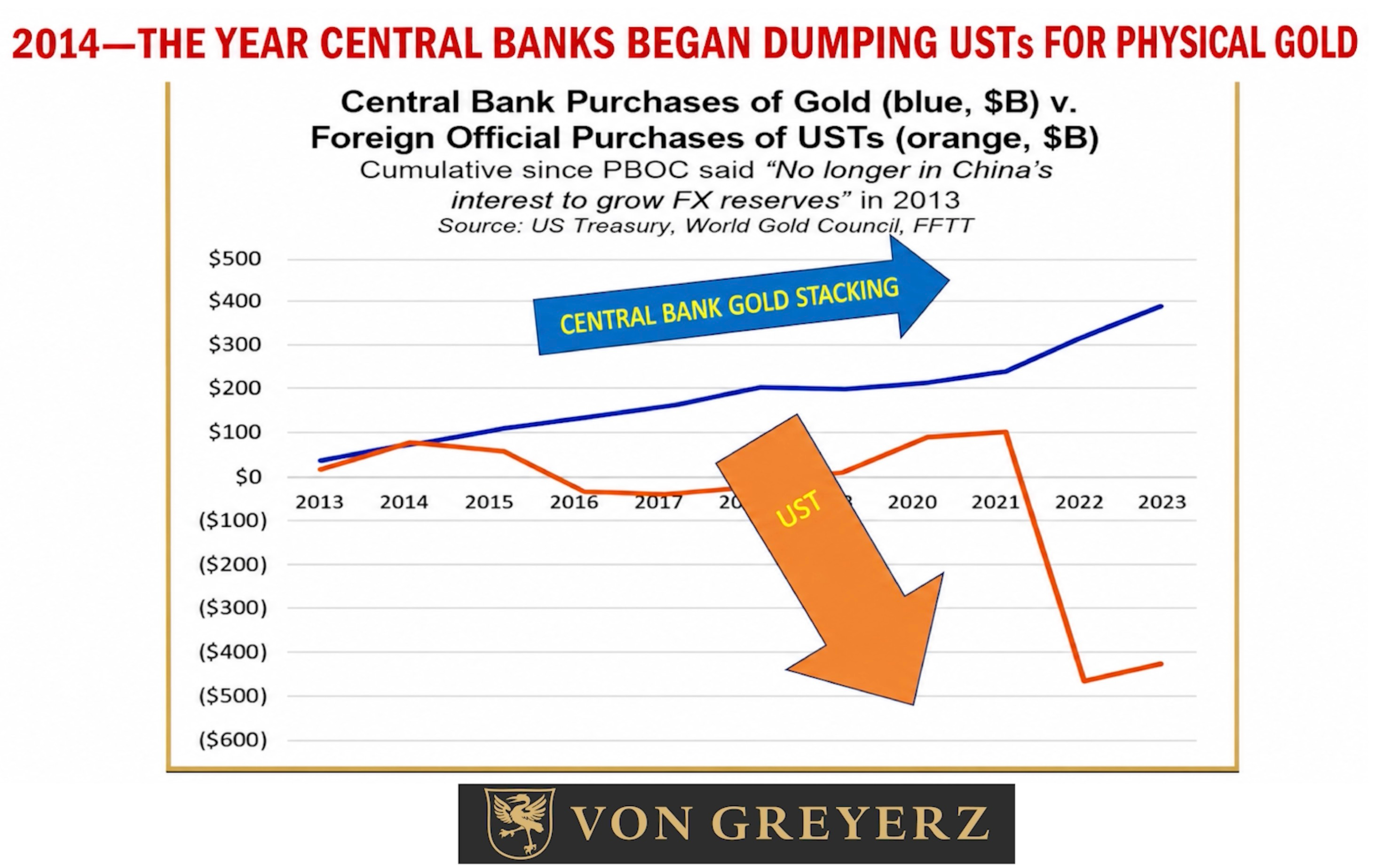
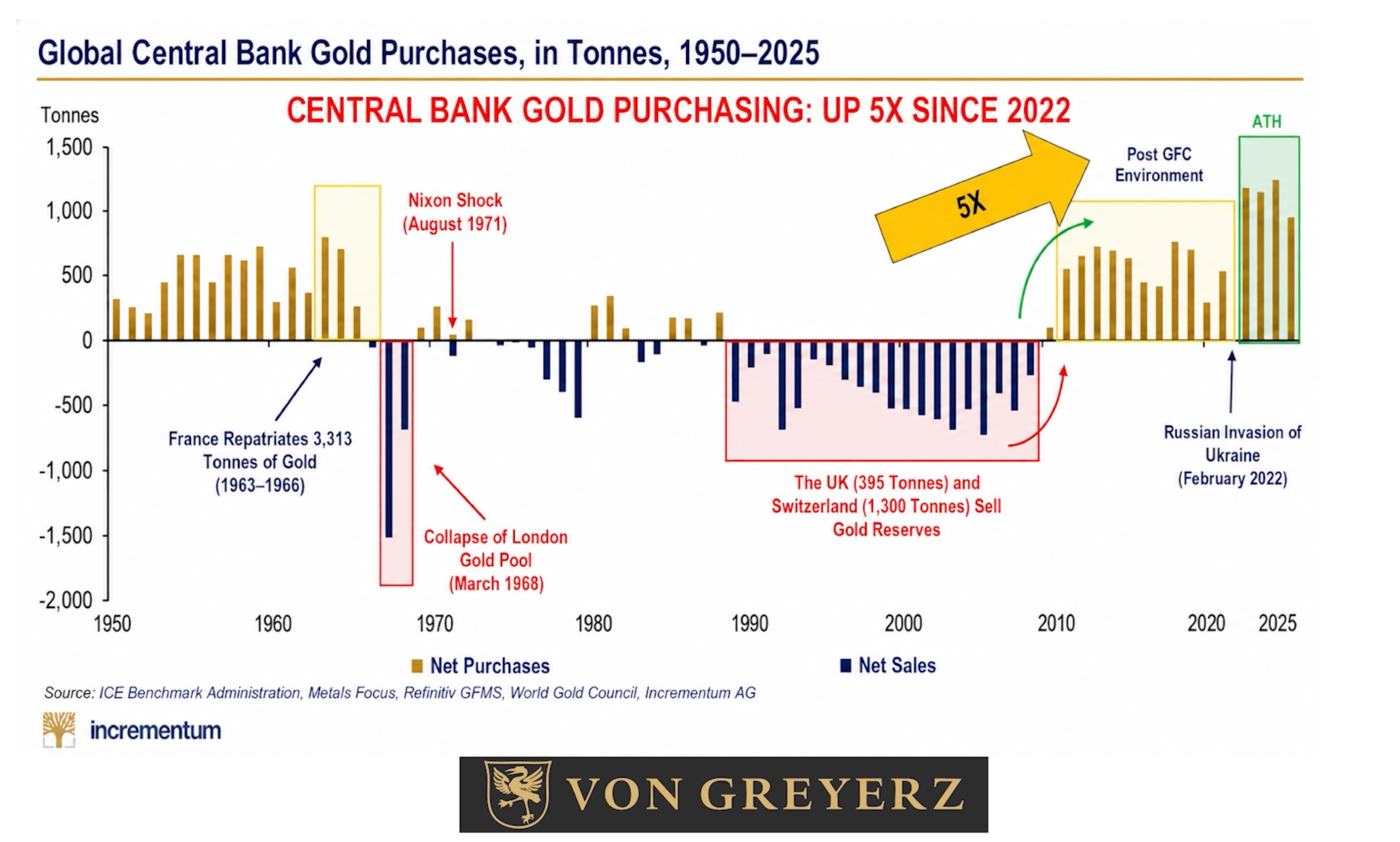
Since 2014, central banks have steadily reduced their holdings of U.S. Treasuries while increasing their purchases of physical gold. The freezing of Russian reserves in 2022 accelerated that trend.
Many still hold substantial dollar reserves, but they are adding gold at a much faster pace than before.
Annual central bank buying now stands several times higher than it did before 2022, with countries such as China, Poland and Kazakhstan continuing to add to their reserves.
At the same time, foreign ownership of U.S. government debt has continued to fall.
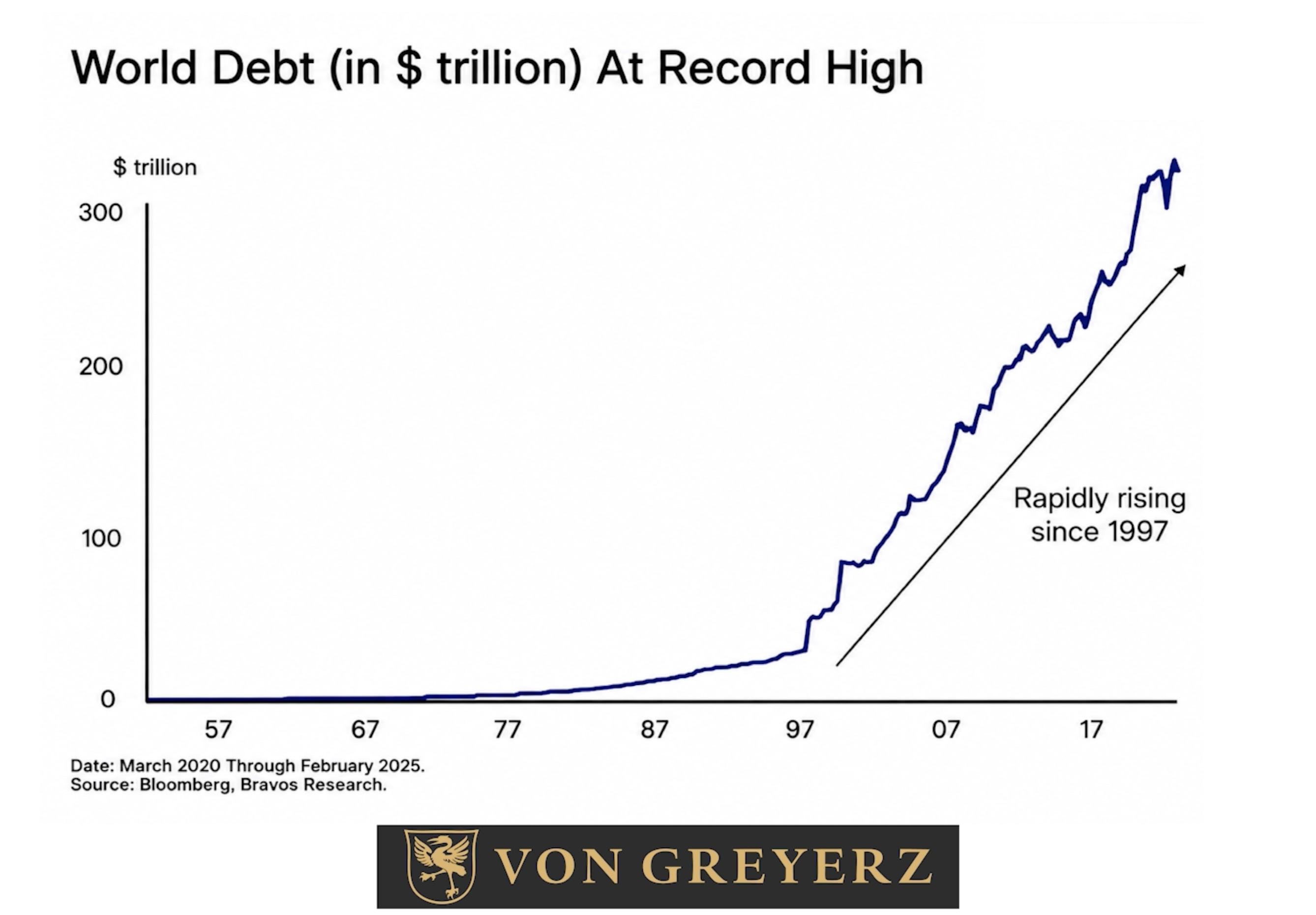
Debt remains at the center of the story.
Global debt has continued to rise while interest rates remain far higher than they were for most of the past decade. Financing that debt has become increasingly expensive, placing growing pressure on public finances.
History suggests that governments carrying debt on this scale rarely rely on austerity or widespread defaults. More often, they respond with monetary expansion, allowing currencies to lose purchasing power over time.
That is the environment in which gold continues to attract long-term demand.
Unlike government debt, gold is no one's liability. It cannot be created through monetary policy and has served as trusted collateral across centuries of monetary change.
Short-term price movements will always attract attention, but the broader question remains the same: “As debt continues to grow, what happens to the purchasing power of the currencies used to service it?”
KEY INSIGHTS
00:00 – 03:19 | Looking beyond the gold price
Gold’s recent correction, long-term performance, and why measuring returns in gold can tell a different story than measuring them in dollars.
03:20 – 05:35 | Gold replaces paper collateral
The steady rise in central bank gold purchases and the declining role of U.S. Treasuries in global reserves.
05:36 – 06:57 | Debt changes the outlook for gold
Record government debt, the limits of higher interest rates, and the long-term effect of currency debasement.
06:58 – 08:59 | Gold’s place in the monetary system
Gold’s role as a store of purchasing power while debt and money creation continue to expand.
09:00 – 10:29 | Measuring wealth in real terms
Why gold offers a different perspective on wealth than paper currencies during periods of monetary change.


