


Norway’s $2.3 trillion sovereign wealth fund reported a record $184.3 billion profit in the first half of 2026. This is supported by technology stocks during the AI boom.
But its CEO, Nicolai Tangen, warned that the fund could lose nearly all its value in a catastrophic stock market crash, nuclear war, or biological weapons attack.

Recognizing the danger isn’t enough.
We need to know what steps are being taken to protect the fund if these risks materialize.
If a major crash is considered a real possibility, the fund should reconsider its exposure to US technology stocks, the wider stock market, and bonds. It should also hold substantially more physical gold.
Rising Bond Yields Put Pressure on Markets
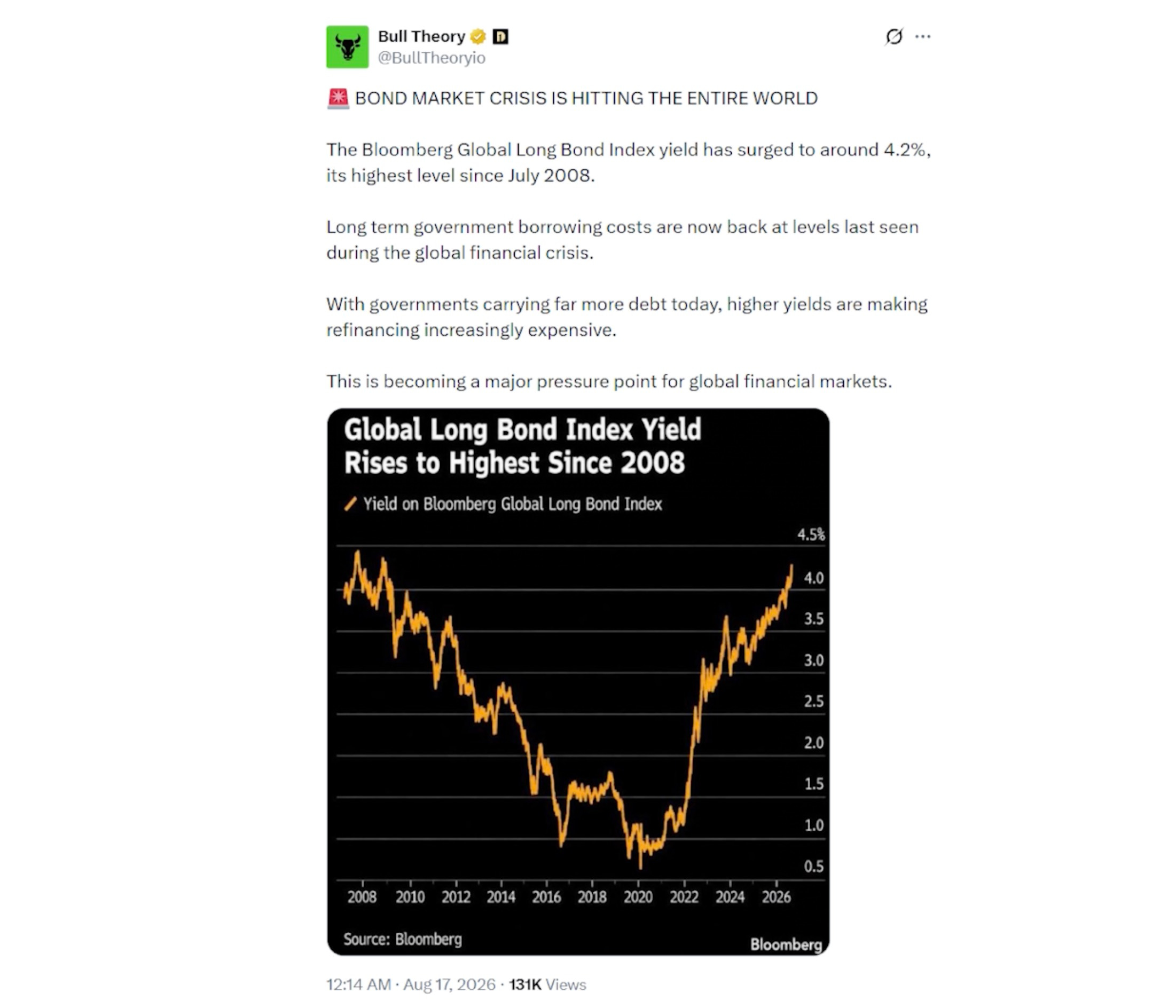
The bond market is another warning sign. The Bloomberg Global Long Bond Index yield has risen to around 4.2%, its highest level since July 2008.
Long-term government borrowing costs are back at levels last seen during the global financial crisis.
Government debt keeps rising, and more bonds are coming onto the market. The chain of events could look like this:
Rising debt → Bond sell-off → Higher yields → Higher borrowing costs → Further debt growth → Falling stock markets
As Jan Kneist of Investor Talk puts it,
“There are really good chances it would be the worst crash of all times because the imbalances are so big.”
The United States provides a clear example of the debt problem. The federal deficit is increasing by around $2 trillion a year, while the figures discussed in the interview show a $432 billion deficit in July 2026 alone.
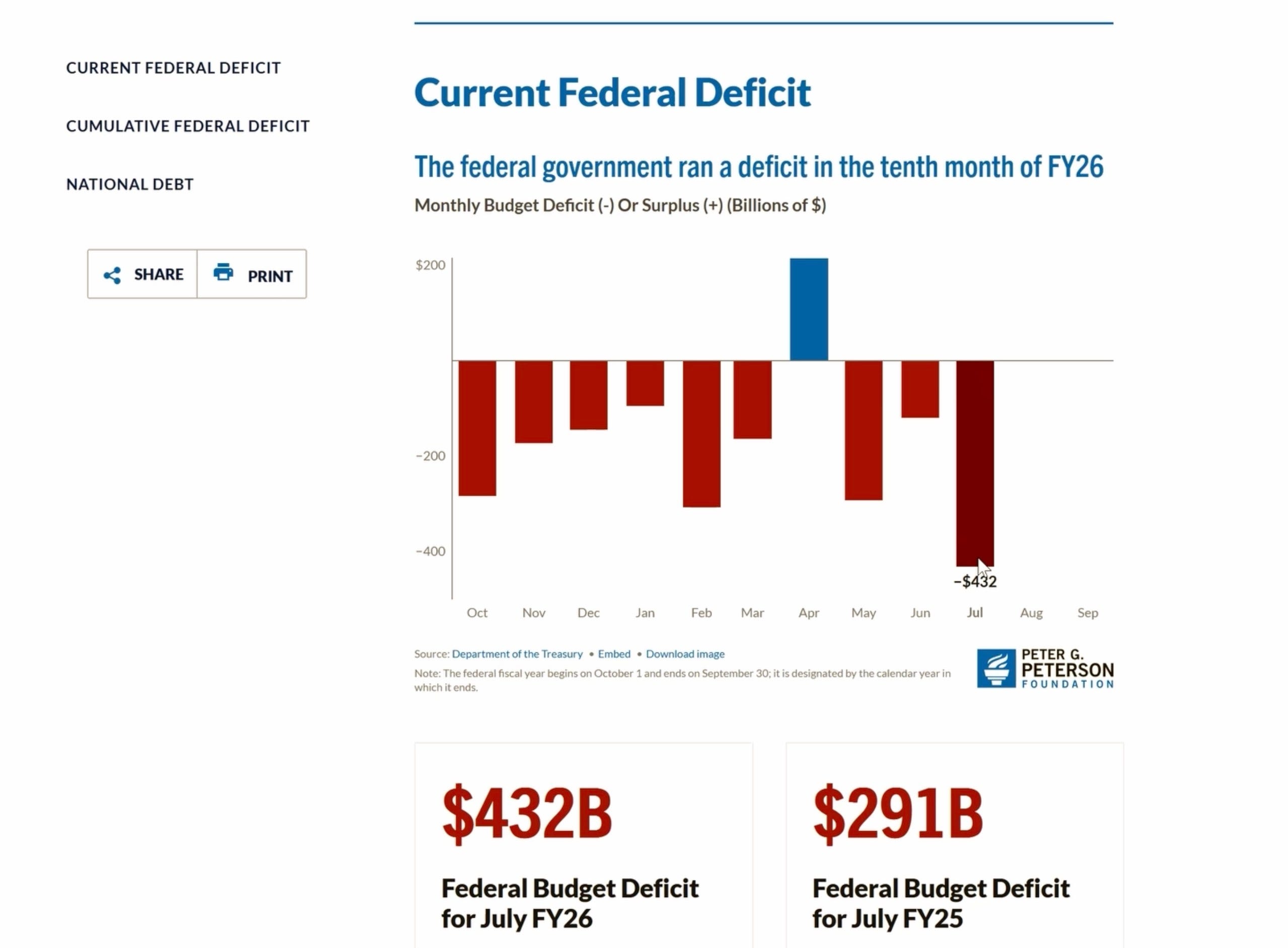
US government debt is approaching $40 trillion, with annual interest costs already around $1 trillion. Higher inflation and interest rates could push those costs up further, making it more difficult for the government to finance its rising obligations.
The result could be a vicious cycle:
Higher debt increases interest costs.
Rising interest costs put further pressure on government finances.
Larger deficits require more borrowing.
More borrowing adds to the pressure on bond markets.
These imbalances could create serious problems for the financial system. A major crisis could bring falling stock prices, losses in the bond market and a deeply depressed economy, with recession or depression and social unrest among the possible consequences.
Why Hold Physical Gold?
Gold is the simplest way to protect against the risks of the fiat monetary system.
As government debt grows and confidence in fiat money comes under pressure, physical gold provides an alternative to relying entirely on stocks, bonds, and paper currencies.
Norway could become the world’s largest gold buyer and put a substantial share of its sovereign wealth fund into physical gold. Such a move would be “sensational, but that would be prudent.”
But very few sovereign wealth funds take this approach. So, it’s important to hold physical gold directly and store it in a safe, secure location outside the banking system.
This gives you greater control over your wealth.
KEY INSIGHTS
00:00 – 01:50 | Norway’s sovereign wealth fund faces a major risk
Despite record profits driven by technology stocks, Norway’s $2.3 trillion fund could suffer severe losses in a major stock market crash.
01:51 – 03:50 | Warning about a crash is not enough
If the risk is real, major investors should take steps to protect their portfolios rather than remain heavily exposed to US technology stocks, equities, and bonds.
03:51 – 04:10 | Physical gold offers protection against fiat money
With excessive debt threatening the monetary system, physical gold is presented as a straightforward way to protect wealth against the risk of fiat money losing its value.
04:11 – 05:38 | Rising bond yields signal growing pressure
The Bloomberg Global Bond Index yield has reached around 4.2%, its highest level since July 2008. Further bond market selling could push yields higher and weigh heavily on stocks.
05:39 – 06:57 | US debt could trigger a vicious cycle
With the federal deficit increasing by around $2 trillion annually, rising interest costs could lead to larger deficits, more borrowing, and further pressure on financial markets.
06:58 – 07:17 | A financial crisis could lead to economic depression
The combination of excessive debt, rising borrowing costs, and financial market imbalances could result in collapsing stock and bond markets, recession or depression, and social unrest.


